Will it be different this time?

Inna Bondarenko watches as a new Russian opposition party is born in exile

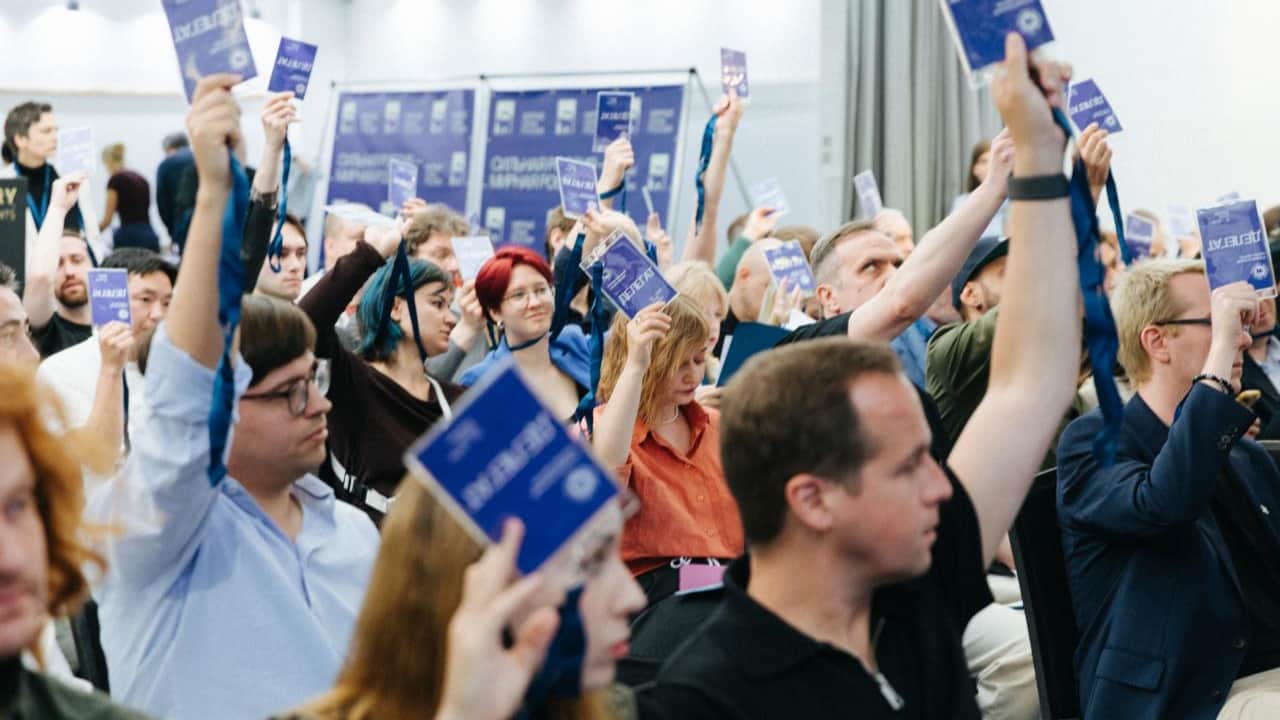
When over 100 members of Russia’s political opposition met in Berlin on 12–13 June to found Peaceful Russia, it was the most significant attempt in years to bring the country’s disparate anti-war movement together to create a serious political force able to credibly vie for power in a future democratic Russia.

Approaching the venue on a gloomy Berlin morning, the first thing I noticed was the smoking. People stood clustered around the doors with their cigarettes, and somehow that alone told me they were Russians. Though some were dressed the way politicians are expected to dress; others had dyed hair, tattoos and piercings. 

Some delegates I had known for years through activism; others I had only ever seen online; but most I didn’t recognise at all — and more than one delegate told me that this was exactly the point. The new faces, not the recycled ones, were among the best arguments to be made for the party’s creation.

“Who are these people?” some of the better-known figures kept asking, occasionally with a trace of condescension. Somewhere in the asking I began to hear an answer: The party of the “first flight out” clearly hoped to be that of the first flight back in too, ready to return the moment a different Russia emerged — and prepared to take power when it did.

I arrived with one obvious doubt: why create a new party at all, when there’s no election to contest and no country to contest it in, and when exile is already crowded with initiatives, each announcing itself as the solution? I sensed the same fatigue in others too — another congress, another manifesto, another attempt to unite an opposition that has wasted years arguing with itself. 
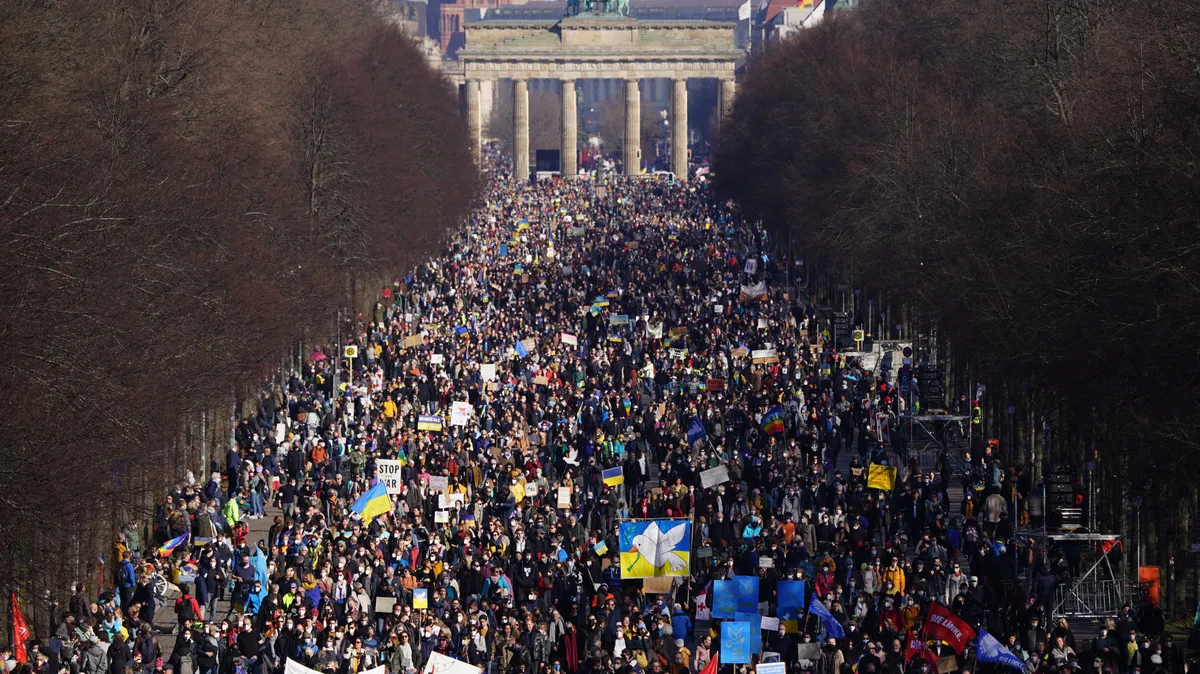
Splintered for as long as it has existed by ego, ideology and personal rivalry, the Russian opposition has a poor track record in its attempts at unity. If the 2022 invasion of Ukraine forced most Kremlin-critics into exile, Alexey Navalny's 2024 death in prison robbed them of the closest thing they had to a figurehead. And yet there is a historical precedent to Russian political parties being founded in exile, the most obvious example, of course, being that of the Bolsheviks.

For someone who has spent years analysing Russian politics from the outside, it was a strange, electric thing to find myself on the inside instead. The congress turned combative fast. People shouted; some of the rhetoric took on a militaristic edge; insults turned personal; and accusations of manipulation, real and exaggerated, flew between quickly hardening rival camps.
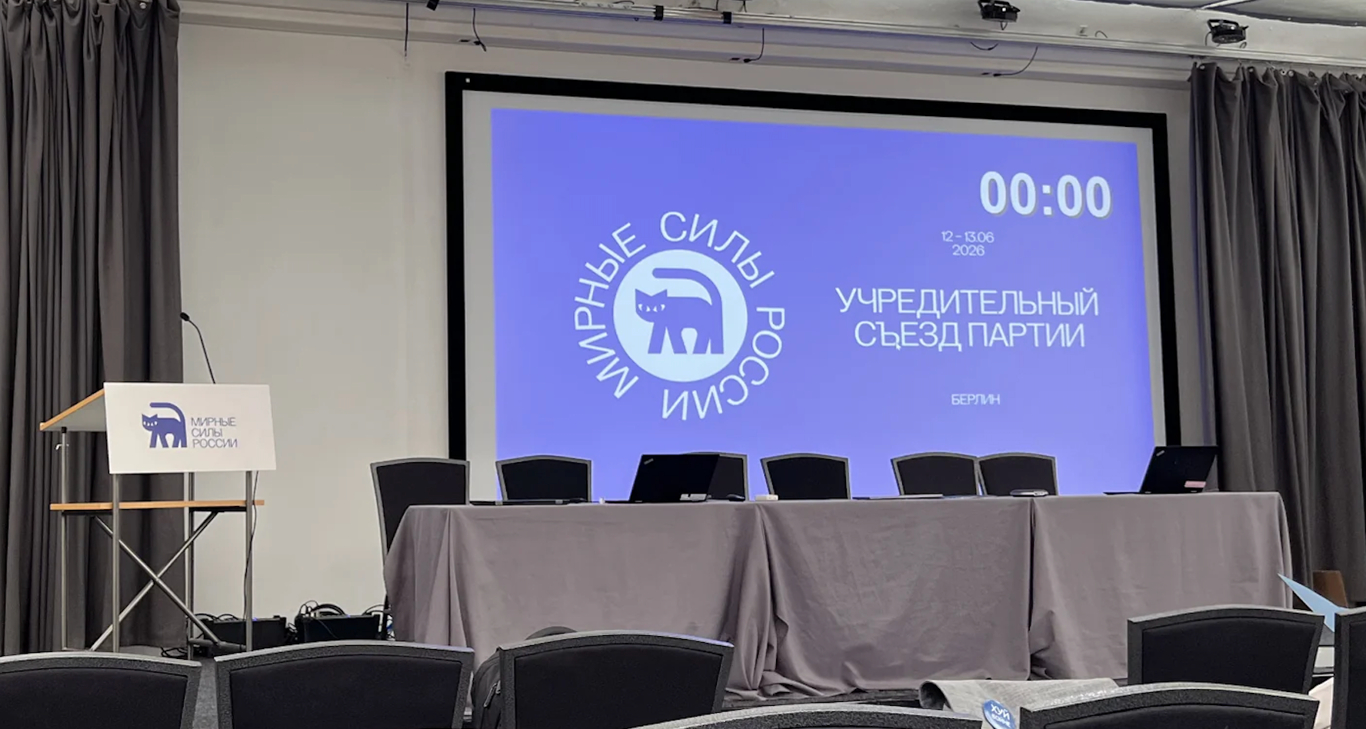
As I wondered how the proceedings had become rancorous so quickly, I also noticed something else: votes were being tallied, amendments were being proposed, debated, carried or defeated — by everyone, not just a chosen few. Though delegates accused each other of procedural violations on stage, half an hour later I saw some of them talking over coffee. In Russian political culture disagreement is often read as betrayal, and though the tone of the debate was hard to like, I soon realised I wasn't watching dysfunction, I was watching politics — real politics — unfolding in real time: messy, frustrating, but alive. 

Even the party’s name was contested, with the congress voting to change the Peaceful Forces of Russia to simply Peaceful Russia, the feeling in the hall being that force had played quite enough of a role in Russian politics already. The party’s symbol, a cat, also reflects that and makes a stark contrast to the bear used by the ruling United Russia party, eschewing motifs of strength and masculinity, and deliberately seeking to project as little power as possible. 

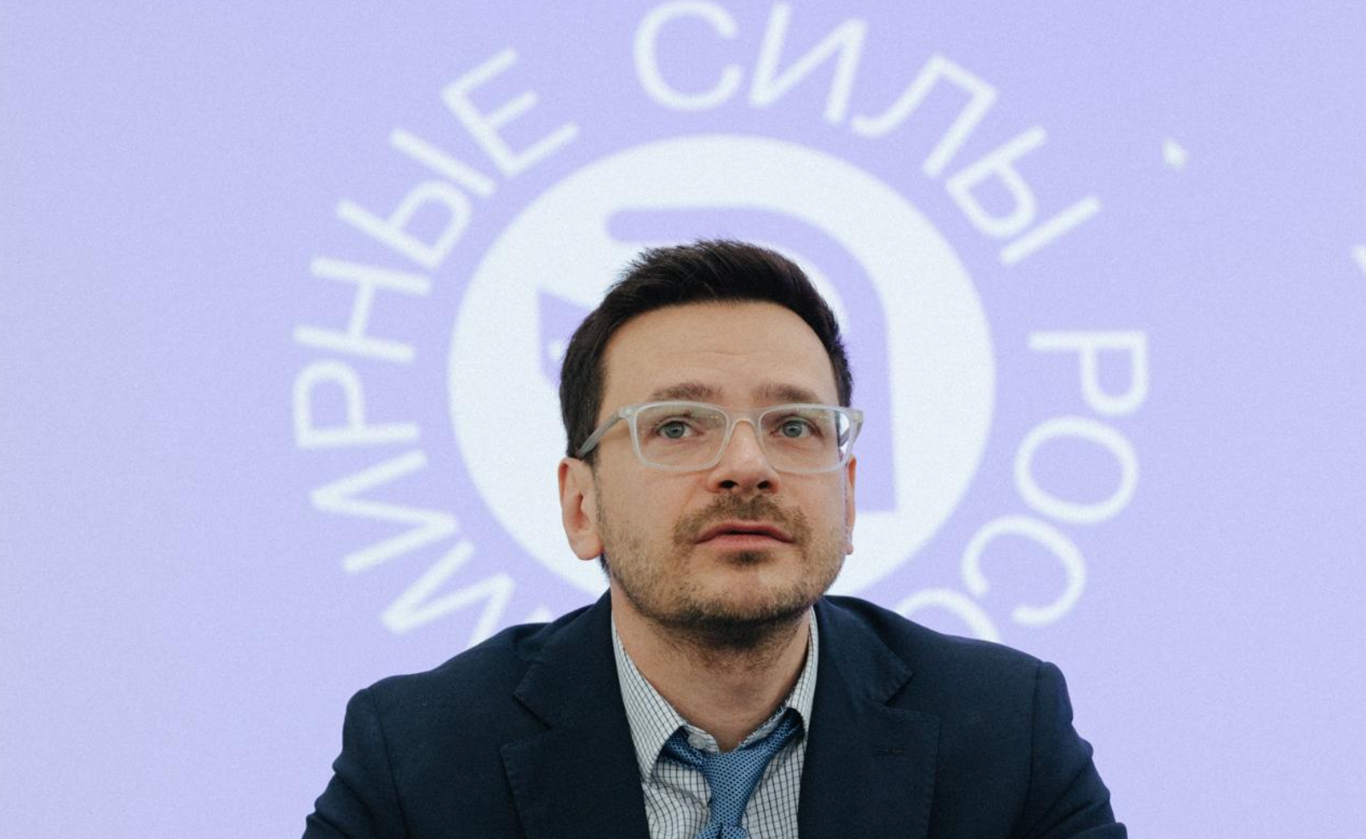
The congress’s most divisive issue proved to be Ilya Yashin, one of the most prominent figures in Russia's democratic opposition and the politician who proposed creating the new party. Jailed in Russia for his criticism of the war in 2022 and then forced into exile two years later as part of a giant prisoner swap between Russia and the West, Yashin announced his plan to launch a new opposition party in March, and arrived in Berlin as the favourite to lead it.

His prominence was precisely the issue, however, and it set off the most heated debates of the entire congress. While some held the view that the party should have a single leader supported by three deputies, others favoured a triumvirate with no single head at all. Much of it came down to one question: how much power should any leader have?

One of the congress’s better-known politicians, Vladimir Milov, argued that internal democracy mattered less than trusting a leader to lead. Others wanted to limit that power to prevent the party becoming a vehicle for any single politician. The old word vozhd — leader, in the cultish sense — kept surfacing, with one delegate arguing that Russians were too traumatised by strongmen to know that they didn’t need another.

Yashin, who in several cases backed amendments limiting the powers of the party leader, won the chairmanship with 68 of the 111 votes, while his challenger, Olga Podolskaya, got 40. Many delegates told me they found the close-run nature of the election encouraging, as contested votes suggest a far more democratic process than the coronations often produced by Russian politics.

Electing a leader, though, settled only who would run the party. It left open the larger question everyone kept circling back to: what needs to be done now, and what can be left for later? Most agreed that in the short term the party needed to represent anti-war Russians and political prisoners, support anti-war initiatives, and to focus on drawing people into an umbrella party through sheer humanism.

The question of what core issues such an umbrella party could unite around remained unanswered … is a common enemy, or a demand for peace, enough to hold a political party together?

What the party should aim to do in the longer term remained far from clear, though it was striking to witness people who are unable to hold a political meeting in their own country debate the constitutional shape of its future abroad, and to hear them insist on being ready before the window of opportunity for change in Russia opens, not after.

Still, the question of what core issues such an umbrella party could unite around remained unanswered. Focus on a common goal, not an ideology, several argued — a Russia without Putin, an end to the war in Ukraine and political repression, the restoration of human rights and the rule of law. But is a common enemy, or a demand for peace, enough to hold a political party together? 

Though the room was full of remarkable people doing difficult and often invisible work for Russians both at home and abroad, and with various agendas — decolonial, feminist, LGBTQIA+, regionalist — it remained uncertain whether that alone could sustain an enduring political force. After all, how do you reach a society you cannot openly organise in, and unite people separated by every border imaginable?

As is often the case with new Russian opposition initiatives, the criticism began long before the congress itself. Though a healthy sign that people were paying attention and refusing to take anything on trust, it was also a reminder of how much suspicion and antipathy has been allowed to build up among the country’s atomised opposition.

Deliberative democracy is by its nature slow, messy and frustrating, and the Russian opposition argued and fought with itself in its own time-honoured fashion. 

For some, the entire congress became a referendum on Yashin, while for others it was overburdened by procedure, or moved too fast. For a supposedly transparent project, it often felt strangely inward looking — many Russians have never even heard of it, while others have already written it off as doomed, like every attempt before it.

Still, for two days I watched over a hundred people argue, laugh, curse, break protocol and keep talking long after their microphones went dead — real people with opinions and feelings, not the lickspittles who currently fill out the ranks of Russia’s political system. Deliberative democracy is by its nature slow, messy and frustrating, and the Russian opposition argued and fought with itself in its own time-honoured fashion. 

But this time something did feel different — disagreement happened in the open and criticism was expected rather than interpreted as betrayal, newcomers won seats from established politicians, and nobody went away with everything they wanted. 

Though I share much of the scepticism voiced by other observers, it’s still too early to know whether this opposition initiative is fated to end the same way as so many that went before. I left Berlin exhausted, and with far more questions than answers, yet I also came away with something I hadn’t expected to feel since Navalny’s death: hope.

Views expressed in opinion pieces do not necessarily reflect the position of Novaya Gazeta Europe.
Share
Topics