‘I’ll baptise you with eight years in prison’
Inside Russia’s crackdown on Jehovah’s Witnesses, nearly a decade after it began

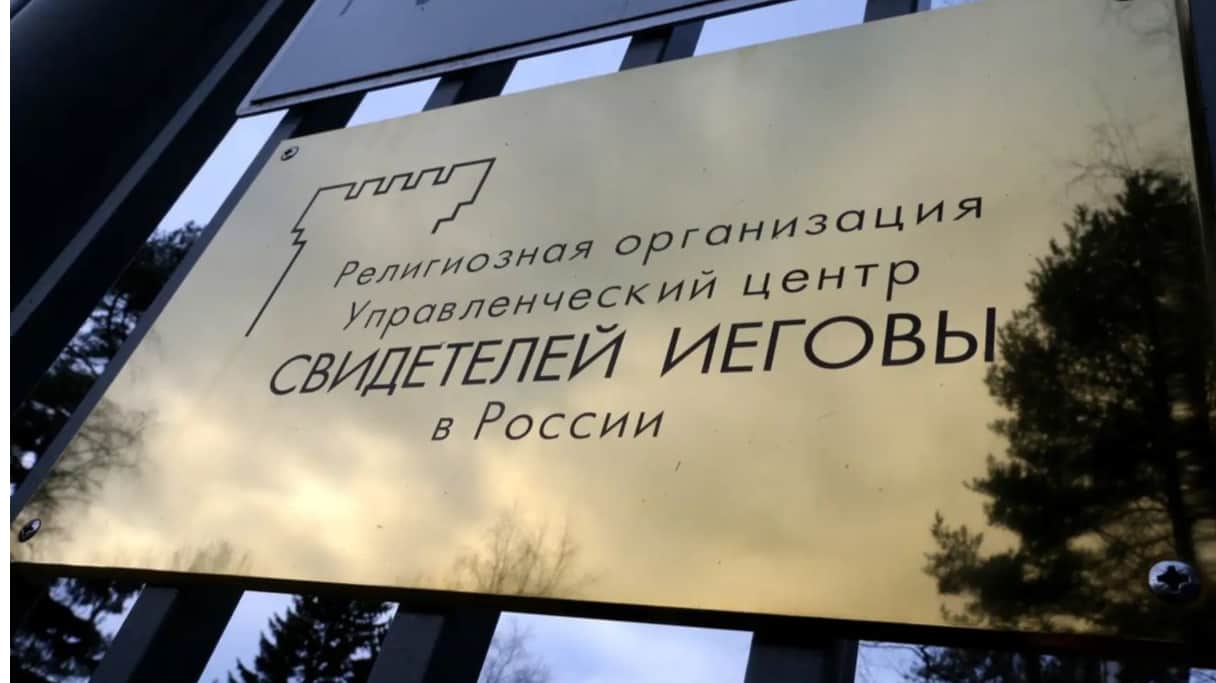

Since Russia designated Jehovah’s Witnesses as an extremist organisation in 2017, the authorities have brought criminal charges against 976 members of the faith. According to statistics compiled by the World Headquarters of Jehovah’s Witnesses, 547 have spent time behind bars, with 116 currently serving sentences in penal colonies, and 52 still in pretrial detention. Another 355 have received suspended sentences. Novaya Gazeta Europe traces the history of the group’s persecution in the Soviet Union and examines why they remain a target of Russian authorities today.
A history of repression
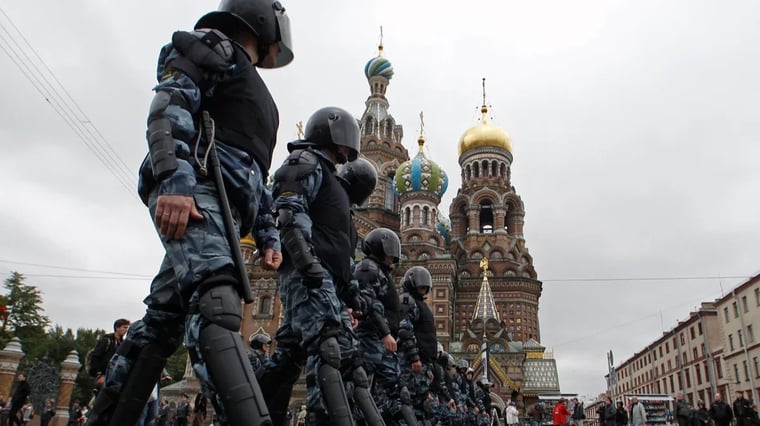
In the early morning of 18 June, five armed law enforcement officers wearing masks, accompanied by another eight in plainclothes, broke down the door to an apartment in a Moscow suburb. The home belonged to Marina, an elderly woman and Jehovah’s Witness who was at work at the time. Inside were Marina’s daughter and young grandson. As the officers searched the apartment, they pointed their weapons at the two of them. The boy, overcome with panic, started vomiting. When Marina came home in the evening, she was immediately arrested. After spending a night in jail, she was placed under house arrest and charged with “organising religious gatherings” and “engaging in preaching activities”.
Marina’s case is far from an isolated one. Jehovah’s Witnesses have long been a target of authoritarian regimes. Besides Russia, they have been banned in North Korea, China, Iran, Eritrea, Tajikistan, Turkmenistan, and several countries in the Middle East and North Africa. In Nazi Germany, they were outlawed and sent to concentration camps, where they were identified by purple triangles sewn onto their uniforms.
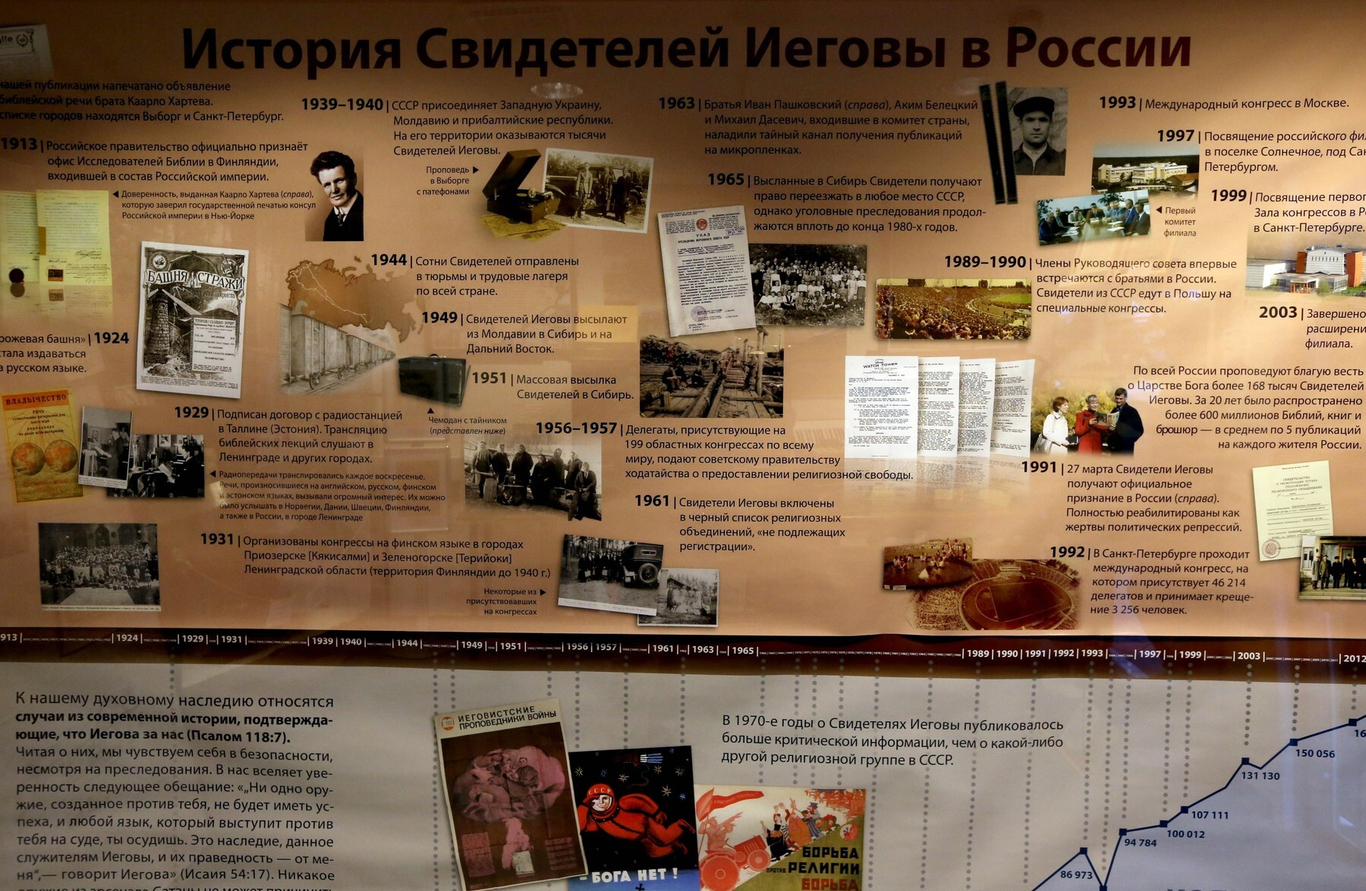
In the Soviet Union, Jehovah’s Witnesses were designated an “anti-Soviet fanatical sect” and religious leaders were imprisoned. In 1951, Stalin personally authorised Operation North, which saw nearly 10,000 Witnesses (and occasionally even their non-practiing relatives) deported from Moldova, Ukraine, Belarus, and the Baltic states to Siberia. The journey was brutal, with deportees spending an average of three weeks living in unsanitary livestock railcars. According to Russian human rights group Memorial, the mortality rate among those newly resettled was 20%.
It was only in 1965, under the Brezhnev government, that restrictions on Jehovah’s Witnesses were lifted. By then, however, their property had been seized and transferred to others. Many instead resettled in southern Russia and the Caucasus, developing new religious communities there alongside those that had taken root in Siberia and the Far East. It wasn’t until the dissolution of the Soviet Union in 1991 that Jehovah’s Witnesses were recognised as victims of political repression and granted compensation.
Persecution in modern Russia
Under Putin, Jehovah’s Witnesses in Russia now face renewed religious persecution. In April 2017, the Russian Supreme Court designated the group as “extremist” and banned all 396 Jehovah’s Witnesses’ organisations operating in the country. The court pointed to their preaching of superiority over other religions, distribution of previously banned literature (including their own translation of the Bible), and prohibitions on blood transfusions and military service.
Since the Russian Constitution promises freedom of religion, various government agencies and officials stressed that the designation didn’t amount to a ban on the faith itself. At a meeting of the Human Rights Council in December 2018, Putin feigned indignation and called the decision “complete nonsense”. “We can, and perhaps even should, at some point be much more liberal toward representatives of various religious groups,” he remarked. In practice, however, the situation only worsened.
In October 2021, after the arrest of hundreds of Jehovah’s Witnesses, the Supreme Court clarified that individual or joint worship, religious services, rites, and ceremonies “do not in themselves constitute a crime”, unless tied to the continued activity of a banned organisation. But this did little to stop the crackdown. To date, the Russian authorities have raided the homes of nearly 2,400 Witnesses, according to the World Headquarters of Jehovah’s Witnesses. The group told Novaya Gazeta Europe that religious life in Russia has been reduced to discussing the Bible over video calls. Even that, however, can be classified as “continuing the activities of an extremist organisation”.
Few human rights organisations remain in Russia to provide assistance to Jehovah’s Witnesses. The last major organisation to provide such help was Memorial, dissolved by Russian courts in 2021. Private lawyers are also increasingly afraid to take on these cases.
So why does Russia repeatedly target Jehovah’s Witnesses? According to the Witnesses themselves, it stems from their refusal to fight for the state. Their belief in political neutrality bars them from military service, though it equally prohibits them from protesting war or discouraging others from enlisting. Their faith also limits other forms of engagement with the state: they refuse to worship national symbols, take oaths, vote in elections, participate in government, or observe state holidays.
Violence against Jehovah’s Witnesses
The World Headquarters of Jehovah’s Witnesses have documented 80 cases of violence or torture during raids by Russian authorities, often used to pressure Witnesses into naming fellow believers or unlocking their phones. In several instances, the abuse was severe enough to require hospitalisation.
One such case involved Igor Popov, 60, a Jehovah’s Witness and resident of Dimitrovgrad in Russia’s Ulyanovsk region. On 3 February, Russian security forces broke into Popov’s apartment, forced him into the freezing entranceway, pushed him face down on the ground, and beat him. He was then taken to the local Federal Security Service department, where he was beaten for a second time, stripped, and tortured with electric shocks to force a signed, self-incriminating “testimony” and a promise to cooperate with investigators. A court then placed Popov under house arrest, but his injuries were serious enough to require treatment in a hospital surgical ward. Another Jehovah’s Witness, Igor Balashov, was also detained in the same city that day. The elderly man was held for 20 hours without access to food, water, or his medication.
The authorities have also targeted entire families. In one case, security forces detained a grandmother, grandfather, mother, and young child on suspicion of affiliation with the Jehovah’s Witnesses. During the raid, officers barred them from drinking water or using the bathroom. All four, including the child, were taken in for questioning. Authorities sent the grandfather to a pretrial detention centre and placed the grandmother under house arrest.
The experiences of individual families are further documented in The People Who Are Steadfast Under Persecution, a collection of interviews with persecuted Jehovah’s Witnesses compiled by religious scholar Sergey Ivanenko and cultural scholar Yelena Volkova. Among those profiled are Olga and Vladimir Korobeynikov from Kirov. During an interrogation, one officer told Olga: “I’m not the one who banned you. Now that you’ve been banned, we’re just doing our job. Personally, I have nothing against you.” Vladimir was sent to a pretrial detention centre and later given a suspended sentence. The Russian authorities also arrested Yury Geraskov, who cared for the seriously ill Olga after her husband was detained. Though Yury died while the investigation was still underway, the authorities nevertheless tried him posthumously and declared him an extremist.
Cases involving the persecution of Jehovah’s Witnesses are particularly revealing when security officials display their own religious “convictions”, reflecting the Russian Orthodox Church’s efforts to promote religious affiliation among law enforcement agencies. In Kerch, a city in Russian-occupied Crimea, an officer threatened Artem Shabliy, a Jehovah’s Witness, with a phrase that sounded as though it was lifted from the group’s official magazine The Watchtower: “Armageddon has come for you! I’ll baptize you with eight years in prison.”
Faith behind bars
Despite Russia’s crackdown on Jehovah’s Witnesses, the faith continues to attract new converts in the country. Just a few years ago, Alexey began studying the Bible with an acquaintance who happened to be a Witness. By 2024, the Russian authorities had opened a criminal case against him. They accused Alexey of listening to lectures on banned religious literature and discussing his faith with other believers. He received a suspended sentence. Alexey says the experience ultimately pushed him to make the decision to convert: “When I found out that they opened a criminal case against me, I thought to myself, who else should I turn to, if not Jehovah?”
Similarly, Olga joined the Jehovah’s Witnesses in 2017, not long after the group was banned. Her house was raided the following year and she spent four years in prison. “It was really scary,” Olga recalls. “But I understood that these events confirmed we were on the right path.”
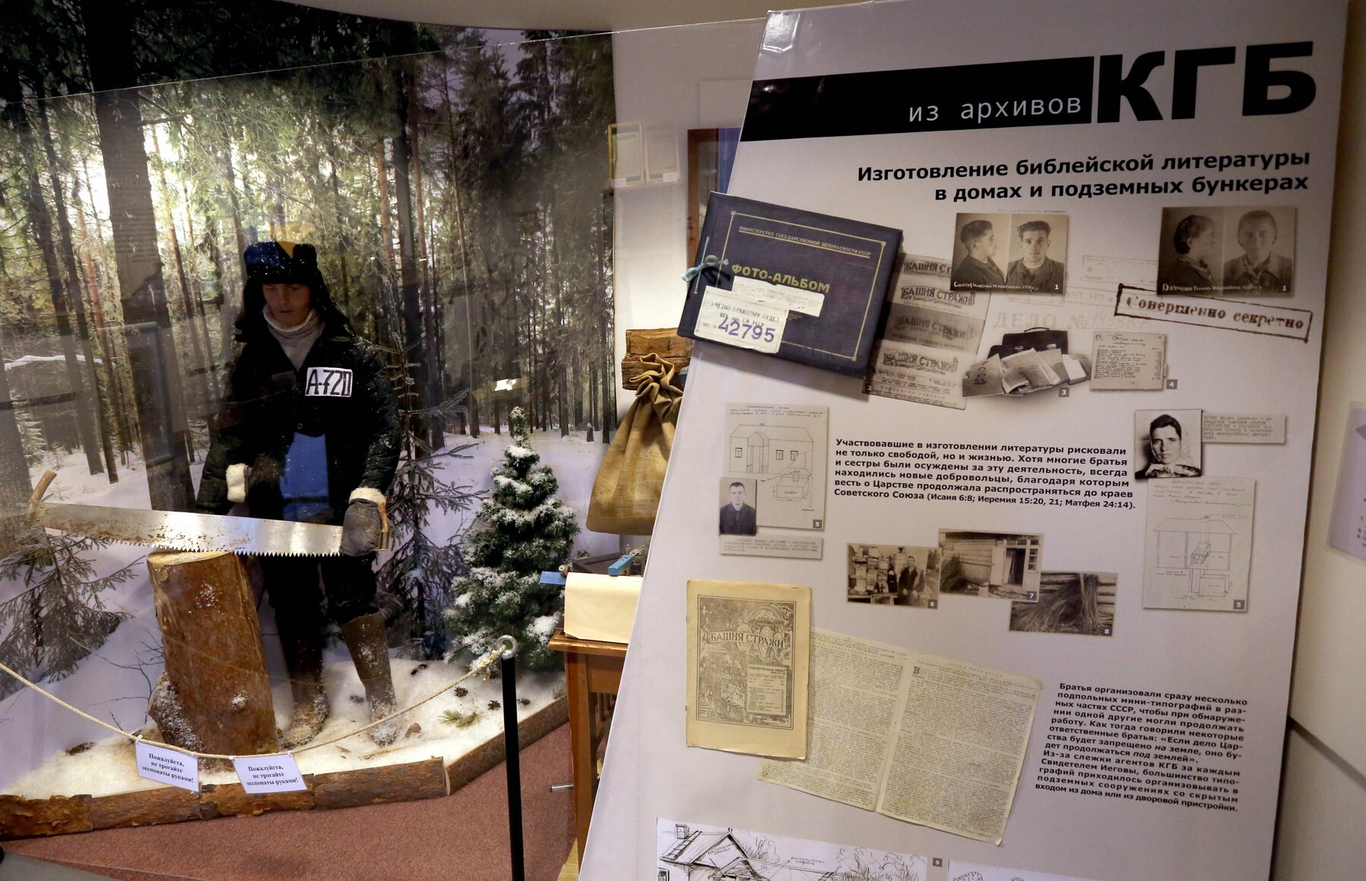
While in prison, fellow inmates often ask Witnesses about their faith. Answering these questions can be dangerous, however. Mentioning religion in conversation, written correspondence, or journal entries can land them further jail time. In January 2025, Georgy received an additional five-year sentence in a maximum-security prison for his journal entries. Rinat Kiramov, who is serving a seven-year prison sentence, was repeatedly placed in solitary confinement to prevent him from receiving parole. He had previously been waterboarded and tortured with electric shocks at a correctional facility in Tula after refusing to name families of Jehovah’s Witnesses in the Astrakhan region.
After a year and a half spent behind bars, Larysa, a Jehovah’s Witness from Moscow, told the court: “Sometimes we suffer because of other people.” The Russian authorities had tracked her down through a postcard mentioning Jehovah that she’d sent to a fellow believer. She spoke of her fear that she may never see her elderly father again before concluding: “God isn’t to blame that I’m here. God definitely loves me. He loved me before, loves me now, and will love me. And that’s something I can feel even in prison.”